- Рейтинг Литрес:5
Полная версия:
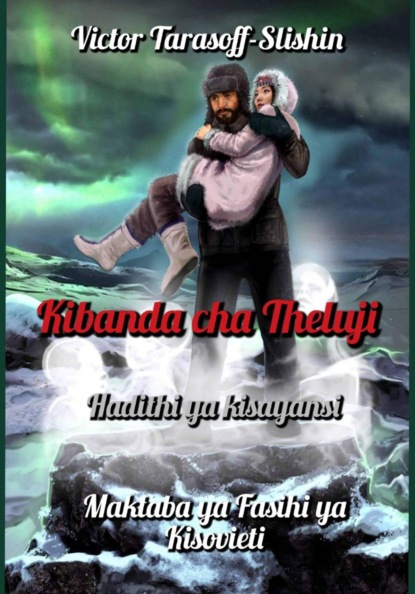
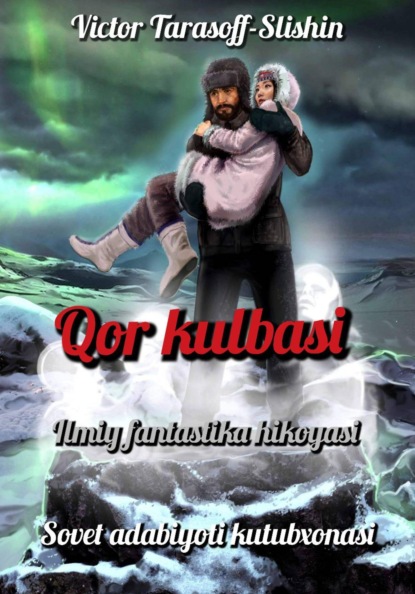
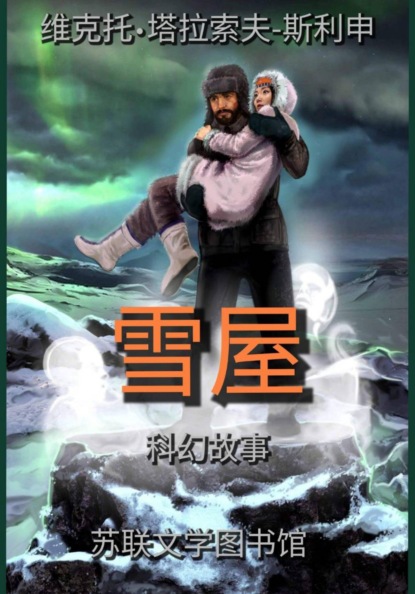
Victor Anatolievich Tarasov-Shlishan Snow Hut
- + Увеличить шрифт
- - Уменьшить шрифт

Victor Tarasoff-Slishin
Snow Hut
SNOW HUT
The Letorical Period
The Letorical Period is the span of time required for humanity worldwide to reassess the events of the past, change the paradigm of collective existence, and move from historical decline toward the flourishing of the chronicle age…
From the Author
Dear friends and comrades!
I present to you SNOW HUT, a scientific letorical story (“Sci–Letory”), which, in addition to reconstructing the distant past, addresses social equality in the well-known tradition of Soviet literature. The work is based on a draft by Anatoly Nikolayevich Tarasov (1939–2012), an intelligent, erudite, and literarily gifted Soviet man.
I substantially reworked my father’s original sketch to make it appealing to readers of different ages. A curious boy can now imagine himself a geodesist in the harsh Arctic, while a high-school girl can picture herself as the mistress of a magical home. An older reader, wise with experience and sitting on a park bench with a book, may agree that the world of the chronicle past was different, intriguing, and beautiful! Readers from the peoples of the Far North will also be able to appreciate the story’s distinctive cultural atmosphere.
The narrative also carries a hidden ideological and moral meaning. So if readers notice that the Gods of the Upper World follow a socially minded, communal way of life, I will not argue with them… In developing the image of the extraterrestrial spacecraft, I chose to assume that its technical perfection rests on the achievements of a highly moral society in which the people themselves hold power—similar to the society I envision in Great-Power Tartaria1 and, in part, in the USSR. That is why Gelyun’s feelings suggest longing for bygone times, fear of the present, and hope for the future—much like what, in the author’s view, a displaced Citizen of the USSR experiences today.
Now for the evil spirit Khargi, the most sinister character in the story! I revived him from Evenki folklore for several reasons. First, as a warning to humanity, I gave the extraterrestrial supercomputer an unpredictable logic dangerous to living beings. Second, I wanted to show readers the treacherous methods used by social parasites aligned with those in power, who deliberately destroy the Russian ethnic community of the Slavs. Third, I wanted readers to learn to recognize manipulation and avoid feeding the egregores2 of an occupying religion and an anti-people government.
In this way, readers can not only imagine further meanings in the story but also learn to enrich the universe with images of light. Finally, I should mention that unfamiliar expressions and terms in the narrative are set in bold type, with their meanings explained in the section entitled Glossary. Az3 wishes everyone kindness and enjoyable reading!
Chapter 1. An Unexpected Encounter

A miraculous letory4 was born during the polar night in the Far North of the RSFSR5. Yet instead of receiving the recognition it deserved, fate condemned it to languish in obscurity for many years! I therefore had to accept the assertion of our senior worker, Mavletdin Mavletdinovich Badretdinov, that I had spent the two days missing from my memory sitting inside a snow hut6
In December 1982 (7491), my topographic survey team from the Taimyr Geophysical Expedition7 was temporarily assigned to the Ikonskaya Seismic Party. Their base stood in the Norilsk tundra, at the confluence of the Mikchangda-Ondodomi and Chopko rivers. We were flown there from Dudinka by helicopter. We quickly settled into a balok8, started the tractor, and, in accordance with our orders, headed northeast toward Volochanka.
Every day we laid seismic cables9, packed down a winter road, marked survey stations, set out survey lines, and conducted instrument-based topographic surveys10. The Ikonskaya seismic crew followed behind us, using directed underground explosions and specialized receiving equipment to locate oil- and gas-bearing domes deep within the rock for industrial development.
The polar night is a three-month period of twilight and darkness that weighs heavily on a person’s mind and body. Everyone must make an effort to overcome the resulting lethargy: laborers, tractor drivers, and especially geodesists11, whose work depends on available light. Nevertheless, from late December until mid-February, we made full use of the hours of daytime twilight, working with all our strength to meet the state plan on schedule.
On December 23, during lunch, the forty-degree frost eased and a warm southwesterly wind began to blow. I therefore had to issue two instructions:
“We’ll keep working at full pace, but watch the conditions. Falling air pressure means a storm!”
The men headed for the door. I wasted no time either. I quickly filled in the logbook, dressed, and went out to the survey line, where my rucksack of small necessities, the theodolite12 on its tripod, and my broad skis, planted heel-first in the hard-packed snow, were waiting. The tractor driver, Lukoshenko, climbed into the tractor, and the frost-covered convoy set off, rocking the imposing drum suspended from a crosspipe and L-shaped brackets bolted to the rear wall of the balok and the sides of the external storage chest.
In two or three days our advance team would reach the boundary of the only mixed forest in the north and move slowly through it, clearing fallen trees and packing down a winter road. An extra day or two in reserve would certainly be useful, especially since the Ikonskaya seismic crew was keeping pace and already preparing to relocate.
The tractor moved through a gently sloping valley alongside flat, weather-worn hills strewn with small pebbles and boulders. Badretdinov unwound the cable drum, while Durov, a geodesist, squinted against the stinging headwind as he laid out the seismic cable. Sobolenko came third, driving the geophone spikes into the hard snow crust and fastening their flexible wires to the cable terminals. For several days now we had been sacrificing our breaks for warming up and drinking tea, and so the crew was making rapid progress.
After recording the readings for the third station of the theodolite traverse13 in my notebook, I turned my attention away from the measurements. Through the whitish swirls, I could just make out the dark square of the convoy that had moved on ahead. At the seventh survey marker, however, the villainous blizzard brought my work to an abrupt halt, despite Mavletdin Badretdinov’s inventive efforts. Before we flew out of Dudinka, he had bought up every four-volt light bulb in the hardware stores, and each morning he dutifully lit them on the survey poles14 by connecting them to frost-resistant batteries.
I cursed in frustration:
“Damn this weather! I can’t see a thing through the theodolite! Time to pack up and catch up with the others. I’d better not end up in another snow hut!”
I had weathered hurricanes beneath snowdrifts before, sitting them out in pitch darkness, shivering from cold and penetrating damp, fighting off sleep, and poking holes through the snow so I could breathe.
Dark pebbles mixed with granular snow began swirling around me, and then the whole valley gave a menacing howl. I put the cover on the theodolite but left its tripod exactly where I had set it up, so I could finish the measurements later without having to repeat the survey tie-in. I slipped my field notebook into my pocket and hurried after the crew, muttering irritably:
“I’ve been trudging around this survey line for over an hour, and I still don’t have the data I need for the calculations! The others must be about two miles ahead by now… They’ve probably finished the run ahead of schedule and are having tea by the little lake near the campsite marked on the map.”
Taimyr snow comes in many forms. Sometimes it is sticky, powdery, or loose, but more often countless winds churn it up, and the frost packs it into a hard, rough crust. That is why everyone on expedition crews skis without poles. I find it very convenient to carry a theodolite together with its tripod, but with a heavy backpack on my shoulders, it is better to separate the two and carry them in my hands. The workers, meanwhile, carry long survey poles on their backs and other instruments in their hands.
I skied along the tractor tracks through the narrowing valley. The sharp headwind forced me to cover my face with a mitten and rub my nose and cheeks from time to time to prevent frostbite. Then, suddenly, at the very edge of hearing, I heard a cry:
“A-a-a-ah!”
I stopped short.
A moment later, the sound came again—perhaps a cry, perhaps a soft moan, like the cry of a small child. It seemed to come from somewhere to my right, probably from beyond a hill, and then it faded away.
Spitting over my left shoulder, I muttered under my breath:
“What was that? Some phantom noise of the North—or a real cry for help?”
Without wasting a moment, I began searching.
Following a gentle curve, I climbed to the top of a hill, skirted a pile of boulders, and instinctively skied down into a hollow. There, quite unexpectedly, I came upon a young girl from a nomadic clan. She was lying on the hard-packed snow with her right leg stretched out. A closer look revealed that she was dressed in fashionable clothing by Taimyr standards: an extravagantly fitted, bead-embroidered kukhlyanka15 made of newborn reindeer calfskin, smoky-colored kerker16 trousers, and tall untayki17 boots of smooth reindeer-leg hide.
Sniffling and staring at me without a trace of fear, the girl took off a mitten and began smearing big tears across her cheeks. I bent down and asked quietly:
“What happened? How did you get here?”
To my relief, the stranger, with her slightly upturned nose and slanting eyes, spoke in Russian:
“I was out riding! Then my dear reindeer stumbled, and I fell into the ravine… I want to get up, but my leg won’t obey me. It hurts terribly! I’m so glad you came. Help me stand up.”
As I lifted the girl by her hands, I asked incredulously:
“You came here riding a wild reindeer? There isn’t a single settlement within thirty miles of here! Where are your parents? Your camp?”
But when I saw that she could not put any weight on her right leg, I decided to postpone the questions and take action. I told her firmly:
“I’ll have to carry you to our balok and examine you carefully. If it turns out to be a complicated fracture, we’ll have to call a rescue helicopter. It will take you to the district center. They’ll certainly treat you at the hospital in Dudinka. If it’s a dislocation, a sprain, or torn ligaments, I’ll take care of you myself and then send you home to your parents.”
Eyeing a suspicious bulge beneath her right untayka, I picked her up and set off. When we rounded the hill and started following the tractor tracks, the girl cried out:
“No, no, omolgi! I don’t need your rattling wagon! Carry me over there, to that rocky hill!”
I looked in the direction she was pointing and swore irritably:
“What the hell for? There’s nothing there but bare rock!”
But the stubborn girl protested:
“Everything is there! A big yurt, a shaman, and food!”
The blizzard was growing stronger. There was no time to argue, so I insisted:
“You want to go to that rocky hill? All right, let’s go! But we have a deal: if there’s no yurt there, I’m carrying you back to our balok!”
The girl nodded.
Raising my skis higher and quickening my steps, I broke into a run toward the jagged hill. My stubborn, almost weightless burden gazed at it hopefully. About ten minutes later, I reached its foot, spread my skis apart, and climbed the slope with careful sideways steps.
Unfortunately, its flat summit, worn down by ancient glaciers, held nothing but a few rocks and shapeless boulders propping up the low, dark-gray sky! Gasping for breath after the climb, I asked irritably:
“Well, where’s your country resort?!”
Instead of answering, the girl pointed to a boulder about ten feet high and asked:
“Put me down beside it.”
I did, but kept my arms firmly around her waist. The gusts had grown so strong that they could have blown even a grown man like me off the hill. Standing motionless on her uninjured leg, my companion touched the rough stone.
At that instant, something astonishing happened—something that made me doubt my own sanity! A horizontal crack appeared across the middle of the boulder, splitting the monolith in two. Then its upper half slid away to the right and hung silently in the air, while the lower half vanished in clouds of white mist.
Before I could recover, the girl said reproachfully:
“Don’t just stand there! Climb up!”
Still in shock, I struggled to think. “Why? Where?!”
Nevertheless, I obediently stepped out of my skis, climbed onto the boulder, and froze in anxious anticipation.
“Stand still, and don’t be afraid!” the girl said. Looking into my eyes, she added, “Though a mighty omolgi knows no fear!”
I did not reply. I knew perfectly well that fear has nothing to do with the size of an animal or a person.
The mist rose quickly and enveloped us completely. I took a deep breath and closed my eyes…
As I breathed out, I felt a warm breeze. I opened my eyes with curiosity and stood rigid in astonishment: I was inside a cylindrical room.
“We’ve already descended, and soon we’ll be in the big yurt,” the girl said reassuringly. “This is the entrance hall… Walk forward and stop beside the multicolored circle.”
I counted nine steps before reaching the opposite wall, where a rainbow-colored ring was pulsating. My companion touched it with one finger. The solid barrier rippled and transformed into an arched passageway! I stepped boldly through it and found myself in another room…
The dim light concealed the dimensions of the spacious hall. Yet as I looked more closely at the colored flashes playing across the walls, I instinctively understood that I was standing inside a tall, wide cylinder.
Pointing to a brightly flashing section of the vast circular wall, the girl asked:
“Carry me over there! We’re in the big yurt, omolgi. My shaman lives beyond the yellow wall.”
Chapter 2. The Stone Yurt
I approached the flashing wall and set the girl down. She asked:
“It hurts even to move, omolgi! Undress me. You must enter the shaman’s yurt naked. That is the custom.”
Without asking any questions, I helped her out of her kukhlyanka and pulled off her left untayka by the heel. But there I was forced to stop: even the gentlest touch on her right leg drew an agonized moan. I took a pocketknife from my pocket and, without a moment’s regret, cut through the tough reindeer-hide leather. Only then could I free her legs from the loose-fitting kerker.
Just then the hall was suddenly flooded with bright light, and the adolescent girl I had imagined before me turned out to be a grown young woman wearing a close-fitting, vivid blue jumpsuit. Without visible seams or fastenings, the jumpsuit accentuated her slender waist, rounded hips, and full breasts…
Overcoming my embarrassment, I asked uncertainly:
“Should I cut the jumpsuit too?”
Frowning, she answered seriously:
“No, there’s no need. I can take off the jumpsuit myself!”
Pulling the fastener downward from her collar, along her right breast and hip, she confidently uncovered her slender body.
I thought nervously, “What am I supposed to do? Look?! Damn it, she isn’t wearing any underwear!”
Having some knowledge of battlefield medicine, I turned my attention to her injured leg and discovered that the bones of her lower leg were broken. Not merely broken: they had torn through the soft tissue and protruded from the wound. It was an unpleasant sight. Fortunately, the major arteries had not been damaged! Treatment would probably take six or seven weeks, followed by an equally long period of rehabilitation. I had no faith in self-taught healers or shamans, so I offered sincerely:
“Let’s treat your injuries ourselves. I can set the bones and put on splints…”
I did not finish. The young woman reached toward the wall and interrupted me:
“Wait here, omolgi! The shaman will heal me quickly…”
I nodded absently and watched the wall transform. Under the weight of the young woman leaning against it, the surface first bent inward and parted, then closed again and became transparent. It was as though an invisible stagehand had obligingly raised the curtain on a solemn performance!
The deserted hall was warm. I began to feel hot and took off my winter clothes: my quilted jacket and hat, wet felt boots, and insulated trousers. Then, turning a gift from the seismic crew—a geological hammer that had slipped out of my rucksack strap—over in my hands, I sat down on the floor.
Meanwhile, the stranger’s body floated into a horizontal position. Myriads of emerald sparks swirled around her, sending violet streams from their common center. The streams intertwined around her right leg, forming a band of energy. The final flourish of this sparkling spectacle came from the young woman’s blue-black hair. At first it flowed slowly around her neck and shoulders; then it became electrified and stood straight out, forming a radiant sphere!
Конец ознакомительного фрагмента.
Текст предоставлен ООО «Литрес».
Прочитайте эту книгу целиком, купив полную легальную версию на Литрес.
Безопасно оплатить книгу можно банковской картой Visa, MasterCard, Maestro, со счета мобильного телефона, с платежного терминала, в салоне МТС или Связной, через PayPal, WebMoney, Яндекс.Деньги, QIWI Кошелек, бонусными картами или другим удобным Вам способом.