Полная версия:
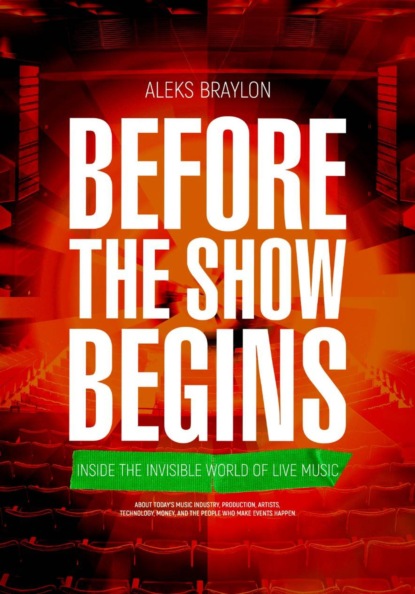
Aleks Braylon Before The Show Begins
- + Увеличить шрифт
- - Уменьшить шрифт
Not Signing Is Also a Decision You Have to Earn
Music culture makes it easy to romanticize independence and demonize large companies. The professional question is more pragmatic: which partner increases the probability of the desired result, and at what cost? A good deal can accelerate a career. A bad one can restrict it for years. A strong independent team can preserve more economic value and control. A weak one can spend years unable to move beyond its existing circle. There is no morally correct deal structure. There are structures that fit or fail to fit a particular stage of a career.
It took me time to stop treating the word independent as a personality assessment. Independence sounds romantic until release Friday arrives and somebody still has to check rights, metadata, payments, advertising, and contracts. Freedom in this industry rarely means the absence of a system. Usually it means you have to build the system yourself. This is one of the principles that repeats across the industry: there is no best system outside of context. Just as there is no single best mixing console for every show, there is no single correct business model for every artist.
Sex Pistols and Virgin: Risk Can Reposition a Brand
By the mid-1970s Virgin was already a significant music company, but it had a problem familiar to many successful brands: the market understood it too well. In Branson's recollections, Virgin was closely associated with hippie culture and progressive music. That association made money - and became a limitation at the same time. The new punk scene could easily have decided that Virgin was simply not one of them.103
The Sex Pistols were almost the perfect way to destroy that perception, and almost the perfect way to acquire a new headache. By the time of the deal, the band already carried scandal, broken relationships with previous labels, and a management operation that had no intention of becoming a comfortable corporate partner. From the perspective of calm operating business, the proposition looked questionable. From the perspective of positioning, it was almost surgical.
The most interesting part came later. The original band did not last long, but the effect of the deal outlived the project itself. In Branson's account, Virgin began to be perceived differently within the new music scene after the Sex Pistols; punk and new-wave artists turned toward the company, later including XTC and The Human League, while the publishing arm secured additional deals.103 It is a useful example of why every music decision cannot be judged only by the direct P&L of one release. Sometimes a project produces catalog profit. Sometimes it opens a territory. Sometimes it creates relationships. Sometimes it changes the market's answer to the question, 'Who are you, exactly?' Strategic effects exist even when they fit poorly into a single budget line.
There is a dangerous conclusion to avoid here: bold risk is not automatically good management. Risk is useful when you understand what you are buying with it - audience, capability, reputation, a new market, or speed. 'We just believe in it' is a beautiful sentence for an artist and a weak one for a financial model. I have increasingly come to separate two things: a project that failed its initial financial hypothesis, and a project that turned out to be useless. They are not the same. Sometimes a disappointing number creates the next important opportunity. Sometimes a beautiful story is invented afterward simply to avoid admitting a mistake. Professional judgment lies in telling the difference.
Music as Rights: The Invisible Part of a Career
It is remarkable how dependent a creative industry is on documents the audience will never see. A split sheet does not receive applause. Metadata does not appear on the LED wall. Registering a work does not make the backstage video. Years later, however, those are the things that may decide who gets paid. In music, value is often created today and monetized for years. A song may find a second life in a television series. An old catalog may return because of a short video. A track can unexpectedly take off in a territory where the artist has never performed. Another performer may record the composition. New forms of use appear that did not exist when the work was created. If the rights were documented badly, popularity increases conflict along with income. Master and composition.
The composition is the song as a work: music and lyrics. The master is one specific recorded version of that song. One composition can have dozens of masters. Every master, in turn, rests on the underlying composition. Most of the complex world of music rights grows from that simple distinction. When a track is used in advertising, rights may be required both for the master and the composition. When another band performs the song, the original master may be irrelevant while composition rights still matter. When a specific recording is streamed, the economics are distributed across several legal layers. For the artist, this matters as more than legal theory. Control determines future freedom, so rights need to be understood as a practical tool. Can the recording be licensed or reissued? Who makes the decision and receives the income, in which territory, and for how long? Who owns the data? Which costs are still recoupable from future revenue? These questions become especially important when a song begins to outlive the release cycle that created it.
The music industry loves to talk about hits. A catalog is more than a collection of hits. It is an asset whose life can extend far beyond the public career of the performer. As events become part of global infrastructure, rights, contracts, and procedures matter more and more because they allow an idea to survive across markets without losing its meaning.
• • •
PART III. LIVE SHOW AS A BUSINESS
Chapter 7. Who Risks the Money: Promoters, Tickets, and Event Economics
From the outside, the promoter business can look almost absurdly simple: buy the artist, sell the tickets, keep the difference. If it really worked like that, the industry would be far calmer. In reality, the promoter buys risk before the audience buys a ticket. Risk has an unpleasant habit: it is nearly invisible in a presentation and becomes extremely talkative once the on-sale begins.
A Promoter Does Not Buy a Concert. A Promoter Buys Risk
When an artist receives an offer, attention naturally goes to the fee. For the promoter, that is only one line in the event model. Around it quickly grow venue rental, production, local crew, security, marketing, ticketing infrastructure, insurance, flights, accommodation, ground transport, hospitality, permits, taxes, medical provision, barriers, cleaning, catering, and dozens of costs that vary by country and format. The promoter assumes in advance the risk that demand will become revenue before costs become loss. An artist may receive a guarantee regardless of how sales perform; the promoter often lives inside the gap between the amount promised to the artist and audience behavior that has not yet been proven.
Concert deals use different settlement structures: a fixed guarantee, a percentage of an agreed base, a share of profit, or combinations of these. Large public companies describe the same mechanics in financial filings. Behind the dry formulas, however, sits a very human conflict of interests. The artist wants the highest and most secure payment possible. The promoter wants to cap downside while preserving a return for taking the risk. The venue wants occupancy and infrastructure revenue. The ticketing platform earns on transactions. The production team needs enough budget to fulfill the rider. And the audience wants a fair price and the feeling that it has been treated honestly.
If every side optimizes only for itself, the event becomes fragile. Good concert business does not begin when everyone likes the same number. It begins when the economics can carry the interests of all participants at the same time.
A Sold-Out Show Is Not Always a Profitable Show
From the technical side, it is easy to look at a concert and think the money 'went into the stage.' Then you see the full budget and realize the stage is one line among dozens - sometimes the most visible, rarely the only dangerous one. Money has a particular talent for disappearing into things nobody photographs: extra labor calls, transport, taxes, idle time, routing changes, and decisions made a month earlier with far too much optimism. This is one of the most useful lessons for anyone meeting live-event economics for the first time. A full room is a strong signal of demand. A sellout by itself does not guarantee a positive financial result.
If ticket prices are too low relative to total cost, a sellout may simply mean every available seat was sold for a loss. If the guarantee is too high, production becomes more expensive, marketing exceeds forecast, currency moves against the project, or the venue has a complicated cost structure, a beautiful video of a packed room still tells you nothing about the result. The reverse is also true: a show can fall short of a sellout and remain commercially successful. A professional promoter watches more than occupancy. They look at average paid ticket price, sales pace, ancillary revenue, final settlement, and the cost of running the event. A show is an emotional product. Its economics require cold mathematics.
The Black Keys: When Arena Booking Runs Ahead of Real Demand
One of the most expensive touring mistakes begins not onstage, but in Excel: the team gets the room size wrong. In 2024, The Black Keys announced a North American tour of arenas and amphitheaters and later canceled the dates. Patrick Carney subsequently said that management had booked venues the band should not have been playing and that the group changed its management team. The story attracted many interpretations, but the operational meaning is simple: artist recognition and real ticket demand are not the same thing.
Booking has a psychological trap. Moving into the next venue category looks like proof of growth: club, theater, arena, stadium. But capacity is not a medal for achievement. It is inventory that still has to be sold. Every empty seat damages the economics and changes the way the show is perceived. Five thousand people in a five-thousand-capacity room create an event. The same five thousand people in a fifteen-thousand-capacity arena can visually and emotionally tell the market the opposite story.
Good agents and promoters therefore look beyond monthly streaming audience, chart position, and total followers. They examine demand by city, sales history, presale velocity, mailing-list geography, comparable artists, price sensitivity, seasonality, competing events, and whether the new music has actually reactivated the existing fan base. Sometimes moving to a smaller venue is a stronger decision than cutting price. A more intimate room restores scarcity, improves atmosphere, and gives the next growth cycle a healthier foundation. Cancellation, however, remains expensive: deposits have been paid, marketing launched, the team has spent time planning, suppliers have held dates, and trust with fans and venues has already been put at risk.
The right scale is part of the artistic product itself. Booking that tries to prove status instead of measuring demand can make a successful artist look like an unsuccessful event.10, 11
Ticket Price Is a Message to the Market
A ticket is not merely a way to collect money at the door. It is also a demand filter, a positioning tool, a way of managing limited capacity, and a promise of value. Before the audience sees the stage, the price already tells them what kind of event the organizer believes this is. A price that is too low can produce an instant sellout while leaving the project without enough margin. A price that is too high can slow sales, increase marketing spend, and leave the room visibly empty. In both cases, the error begins long before show night. It begins in the hypothesis about how many people in this market, at this moment, are willing to pay.
That is why ticket price is one of the most honest meetings between art and mathematics. You can discuss an artist's prestige forever, but at the moment someone clicks Buy, the market answers with money.
Why There Is No Single 'Correct' Ticket Price
People like to compare a ticket price with last year or with another artist, as though two hours of music had an objective universal value. In reality, price is formed by demand, capacity, market positioning, routing, cost base, seat quality, package content, and buyer behavior. The same artist can have very different economics in different cities. In one market, demand exceeds supply several times over. In another, the name is well known but purchase intent is weaker. In a third, much of the audience may be expatriate, and travel and holiday calendars can materially change sales. In a fourth, religious, cultural, or seasonal factors change the viable event window. Price is not only a number. It is a hypothesis about human behavior.
Premium, VIP, and the Desire to Be Closer
Concerts have long sold more than admission to a room. A better view, a separate entrance, a lounge, early entry, a meet-and-greet, exclusive merch, or a hospitality package turns a basic ticket into a ladder of different experience levels. For venues and promoters, those products matter because they can increase revenue inside a fixed capacity. For the fan, they purchase not square footage, but a degree of proximity to the event. Product honesty matters especially here. A VIP ticket that is simply more expensive without providing a genuinely different experience destroys trust very quickly. A premium experience should be felt before, during, and after the show.
Ticketing: Infrastructure People Notice When It Fails
Ticketing looks simple until you have to sell thousands of seats across different sections and price levels, multiple presale waves, sponsor and artist allocations, accessible seating, technical kills, and VIP holds - while the venue configuration may still change after sales have already started. In 2025, according to Live Nation reporting, Ticketmaster distributed 646 million tickets through its systems, including fee-bearing tickets and other transactions. That scale explains why ticketing stopped being an electronic box office a long time ago. It is infrastructure for access to events and an enormous database of demand.
A Hold Is an Invisible Ticket
A 'ten-thousand-capacity venue' almost never means ten thousand tickets for sale. Some seats disappear behind scenic structures, FOH, cameras, or delay towers. Some are held for the artist, sponsors, venue, and guests. Some sections are not opened until the actual geometry of the stage becomes clear. The difference sounds like accounting until the on-sale begins. A large FOH position may cost dozens of seats, a delay tower hundreds, a wide stage an entire section. Conversely, a late design change can sometimes release seats back into inventory. A creative decision can literally change the financial capacity of the room.
That is why I dislike treating 'technical holds' as something secondary. Every killed seat is a small demonstration that production and economics exist on the same drawing. A huge screen may make the show stronger while reducing potential revenue. The better question is whether the screen creates enough value to justify its entire financial footprint, not simply whether the screen itself is expensive.
Sales Data as a Production Signal
Ticketing data are not useful only to marketing. Sales pace can affect decisions to open additional sections, change the configuration, add a performance, scale back infrastructure or, in the worst cases, move the event. For production, that means the seating plan and drawing can remain fluid surprisingly late. In the ideal world, everything is approved first and tickets go on sale afterward. In the real world, commercial and technical systems develop in parallel. The job of management is not to be surprised by change, but to keep change under control.
Taylor Swift, Oasis, and the Moment Ticketing Becomes Part of the Show's Reputation
Ticketing is especially interesting because the audience does not experience it as an outside service. It becomes part of the relationship with the artist. If a presale crashes, the queue feels opaque, or the price changes unexpectedly, frustration is rarely directed at software alone. It transfers to the whole project.
In November 2022, the presale for The Eras Tour became one of the best-known ticketing failures of recent years. Millions of users encountered queues and technical problems, and the general public on-sale was canceled. The issue reached a U.S. Senate hearing. Arguments over cause continued - Ticketmaster pointed to extraordinary demand and bot traffic, while lawmakers questioned system resilience and market structure. For production thinking, however, another lesson matters more: the capacity of a digital entrance needs to be designed as seriously as the capacity of the physical entrance to a venue.
A few years later, the UK's Competition and Markets Authority examined ticket sales for the Oasis reunion tour. In 2025, Ticketmaster committed to greater transparency: clearer advance information about tiered pricing, clearer price ranges and queue changes, and avoiding labels such as platinum where a buyer might mistake the label for a genuinely separate premium product. These cases show two different kinds of failure. One is infrastructure overload; the other is a breakdown in expectations. In both, the customer feels a loss of control at exactly the moment their desire to buy is strongest.
Ticketing is the first mass point of contact between the audience and the tour. Nine months later, the show itself may be technically flawless, but part of the audience will already have formed an opinion about it on the first day of sales.12, 13, 14
Chapter 8. Touring: A Logistics Company with Music Inside
The economics of live events are an excellent cure for abstraction. Every beautiful phrase eventually turns into a budget line, a labor hour, a sold section, or an obligation to the artist.
A Tour Is a Logistics Company with Music Inside
World tours are often described as travel. From inside, they feel more like systems for moving large numbers of people and equipment through a sequence of deadlines. Routing decides more than it appears to. Two cities may look close on a map. Between them there may be a border, a ferry, truck restrictions, poor flight connections, customs requirements, or simply too few hours for an overnight move. One bad routing decision can erase savings that took weeks to find elsewhere in the production budget.
What Travels with the Artist and What Waits Locally
One of the central questions in touring is what should travel with the tour and what makes more sense to source locally. The more equipment travels, the greater the consistency and control - but freight volume, crew size, and customs complexity rise with it. The more equipment is sourced locally, the lighter the logistics - but the greater the differences between markets and the heavier the advance workload.
The decision is rarely ideological. You have to identify what is critical to the show's identity, what is difficult to reproduce locally, which elements contain unique programming, and what can sensibly be rented in each city. Then you compare equipment availability, freight cost, and whether multiple leapfrog packages make sense. Routing is not built around distance alone. People are also systems with limited capacity: sleep debt accumulates, an artist's voice has physiological limits, crews make more mistakes after consecutive heavy load-outs, and equipment requires service. Driver hours are limited by both law and human physiology. A day without a show is therefore not always lost revenue. Sometimes it is an investment in making sure the next five shows actually happen. A weak touring model optimizes each day in isolation. A strong one optimizes the route.
Bad Bunny and Metallica: Two Models in Which Routing Changes the Design of the Show
A touring show has to repeat, but it cannot assume the world will repeat with it. Bad Bunny's World's Hottest Tour used a system that flew the artist above the audience. TAIT described how it had to be reconfigured for the geometry of each stadium. On paper, the effect is identical: the performer travels over the crowd. In reality, every roof, rigging scheme, and available point set creates a new engineering problem. Touring design becomes the art of preserving the impression while changing the mechanism.
Metallica took a different route with the M72 tour. The No Repeat Weekend concept was built around two different set lists in the same city, different support acts, and two nights sold as one larger product. That changes more than marketing. It changes the rhythm of production, content management, rehearsals, backline planning, and crew expectations. The same stadium becomes the venue for two connected but distinct shows.
Both models show why creative direction and routing cannot be separated. If an effect requires architecture that exists only in some venues, it needs either a fallback or enough importance to dictate the route. If the business model depends on two nights in one city, production should benefit from reusing an already-built infrastructure while still giving the fan a strong enough reason to buy a second ticket.
Mature touring design asks questions before the designer falls in love with the render. What is immutable - what must the audience receive in every city? What may change? Where can technology be substituted without losing meaning? Which elements make economic sense only over a run of dates? What absolutely has to travel, and what is better sourced locally? Touring production designs a range of acceptable versions of the same experience. An exact copy of the stage almost never exists anyway. A strong tour remains recognizable in every city even when, technically, no two nights are completely identical.15, 16
Chapter 9. Different Live Formats: Festivals, Private Events, and the Production Company
DID YOU KNOW? Sensation's white dress code was not invented as an ordinary marketing device. It grew out of the memory of Duncan Stutterheim's late brother and eventually became one of the most recognizable visual systems in electronic music culture.105
A Festival and a Headline Concert Are Different Products
On a poster, a headline concert and a festival set can look almost identical: artist name, date, stage time. For a production team, they are different genres of work. A headline show is built around one artist. The stage, running order, video, lighting, audience journey, and much of the technical environment can be subordinated to that one project. A festival works in the opposite direction: one stage has to become home to several touring teams in the same day, each with its own rider, workflow, and a remarkably persuasive sense that its show is the most important one on the site.
The clearest example is changeover. For the audience, music is simply playing between artists. Onstage, the previous backline is already rolling away while the next one comes in along pre-marked lanes. The patch changes. Playback and wireless systems are checked. The FOH engineer loads a file. Monitors switch to a different configuration. Video receives new content. Lighting prepares the next show. All of this may happen in a window shorter than it takes an ordinary person to find parking near the festival.